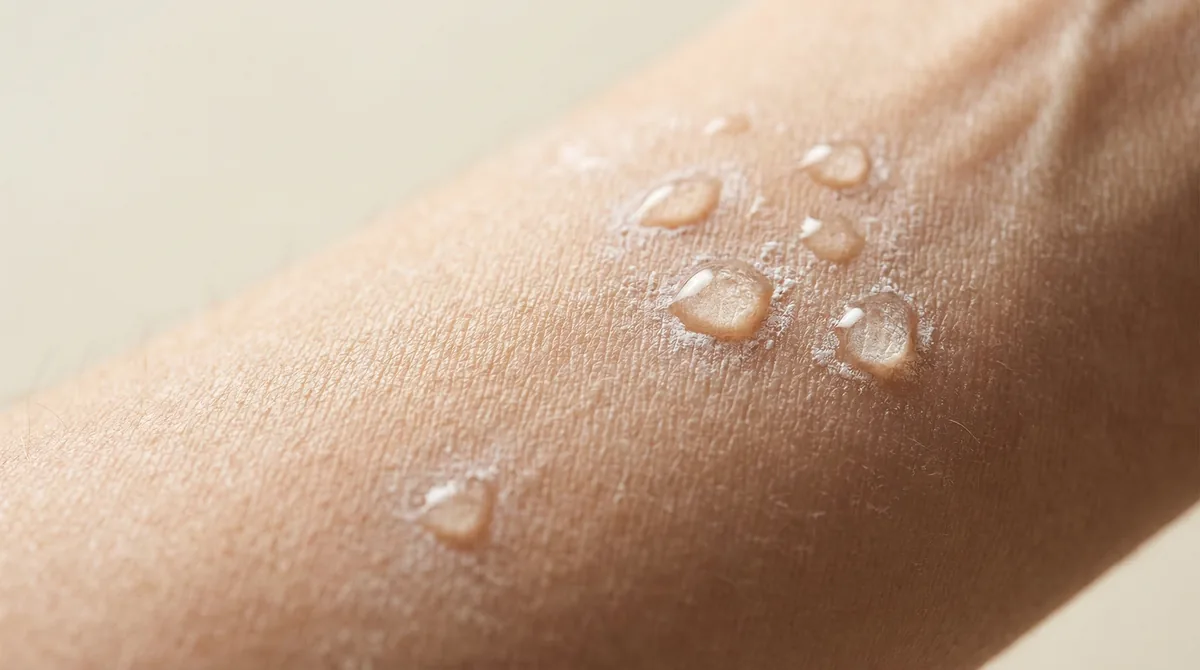
You’ve spent good money on that serum. The moisturiser came recommended by three different dermatologists. Yet somehow, your skin feels drier than it did before you started using anything at all. Here’s what nobody tells you: the problem isn’t your products. It’s what’s happening before they even touch your skin.
Hard water, the kind found across the Gulf region, Arizona, and parts of Australia, doesn’t just leave spots on your shower glass. Research shows it fundamentally alters how your skin barrier functions, creating a mineral film that blocks moisture absorption and prevents your skincare from doing its job. When calcium and magnesium deposits build up on your skin’s surface, even the most expensive moisturiser can’t penetrate effectively.
This article contains affiliate links. See our affiliate disclosure for details.
If you’ve noticed your skin becoming progressively drier despite religious moisturising, or if products that used to work suddenly feel like they’re sitting on top of your skin rather than sinking in, hard water damage is the likely culprit. The good news? Once you understand the mechanism, the solution becomes surprisingly straightforward.
Key Takeaways
• Hard water minerals (calcium and magnesium) create a physical barrier on skin that prevents moisture absorption and blocks skincare products from penetrating effectively
• Mineral buildup changes the skin’s natural pH balance and lipid layer, leading to increased transepidermal water loss and chronic dehydration regardless of how much you moisturise
• The average person in hard water regions accumulates 20-30mg of mineral deposits on their skin daily, which compounds over time and explains why skin conditions worsen gradually
• Chelating cleansers can remove existing mineral buildup, but addressing the water source (through filtration or chelation in your cleansing routine) prevents the cycle from continuing
• Skin barrier repair requires both removing mineral deposits and restoring the lipid layer with ceramide-rich products, a two-step process that most people miss
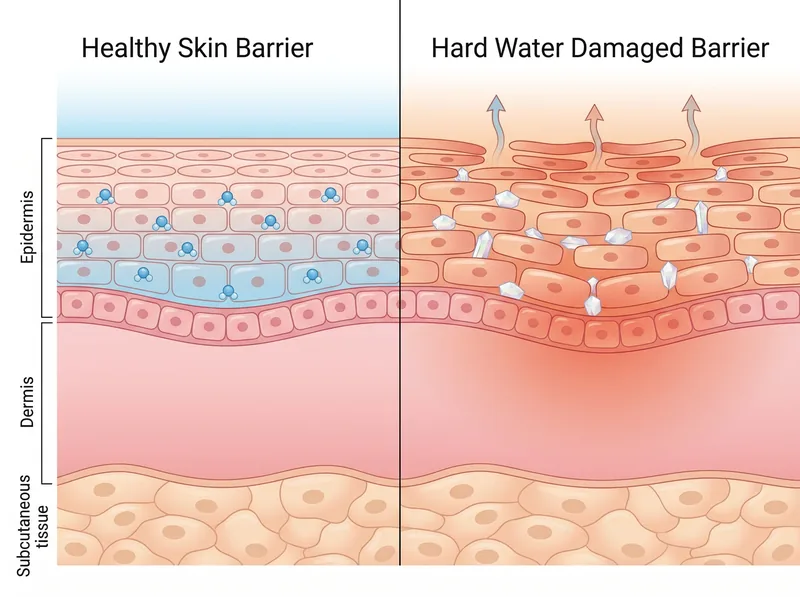 How hard water minerals change the skin’s protective barrier, preventing moisture retention and product absorption
The Science Behind Hard Water and Skin Barrier Damage
Your skin barrier, technically called the stratum corneum, functions like a brick wall. The ‘bricks’ are dead skin cells, and the ‘mortar’ is a mixture of lipids (ceramides, cholesterol, and fatty acids) that holds everything together and keeps moisture in. This barrier is naturally slightly acidic, with a pH around 4.7 to 5.5, which helps beneficial bacteria thrive while keeping harmful microbes out.
Hard water typically has a pH between 7.5 and 8.5, significantly more alkaline than your skin’s natural state. When you wash your face with hard water, you’re not just rinsing with H2O. You’re coating your skin with dissolved minerals, primarily calcium carbonate and magnesium sulfate. A 2021 study published in the Journal of Investigative Dermatology found that exposure to hard water increased the skin’s pH by an average of 0.8 points and reduced the skin’s natural moisturising factor by 23% within just two weeks.
But pH changeion is only part of the problem. Those dissolved minerals don’t just rinse away. They bind to the proteins in your skin cells and to the surfactants in your cleanser, forming insoluble salts that create a thin, chalky film. You can’t see it, but you can feel it: that tight, slightly rough texture after washing your face. That’s mineral buildup.
This film does three things, all of them bad. First, it physically blocks your skincare products from penetrating. Your serum isn’t reaching the living cells below because there’s a mineral barrier in the way. Second, it changes the lipid layer, creating microscopic gaps that allow moisture to escape. Third, it attracts more minerals with each subsequent wash, compounding the problem over time.
Why Your Moisturiser Can’t Compensate
You might think the solution is simple: just use more moisturiser or switch to something heavier. Many women in the Gulf do exactly this, progressively moving from lightweight lotions to thick creams to occlusive balms, chasing hydration that never seems to stick. The frustration is real, and the logic seems sound. If your skin is dry, add more moisture.
But here’s the problem. Moisturisers work through three mechanisms: humectants (like hyaluronic acid) draw water into the skin, emollients (like squalane) smooth the surface, and occlusives (like petrolatum) seal everything in. All three mechanisms require direct contact with your actual skin cells to function. When there’s a mineral film in the way, humectants can’t draw water to where it’s needed, emollients sit on top of the buildup rather than filling in the gaps between cells, and occlusives seal in the mineral layer instead of sealing in moisture.
A 2019 study from the University of Sheffield tracked 80 women using identical skincare routines, half in soft water areas and half in hard water regions. After 12 weeks, the hard water group showed 31% less improvement in skin hydration levels despite using the same products. The difference wasn’t the products. It was the delivery system, blocked by mineral deposits.
This explains why your expensive ceramide cream worked beautifully when you were traveling but stopped delivering results once you got home. The formula didn’t change. Your skin’s ability to absorb it did. And no amount of layering or reapplying will fix a penetration problem caused by hard water buildup.
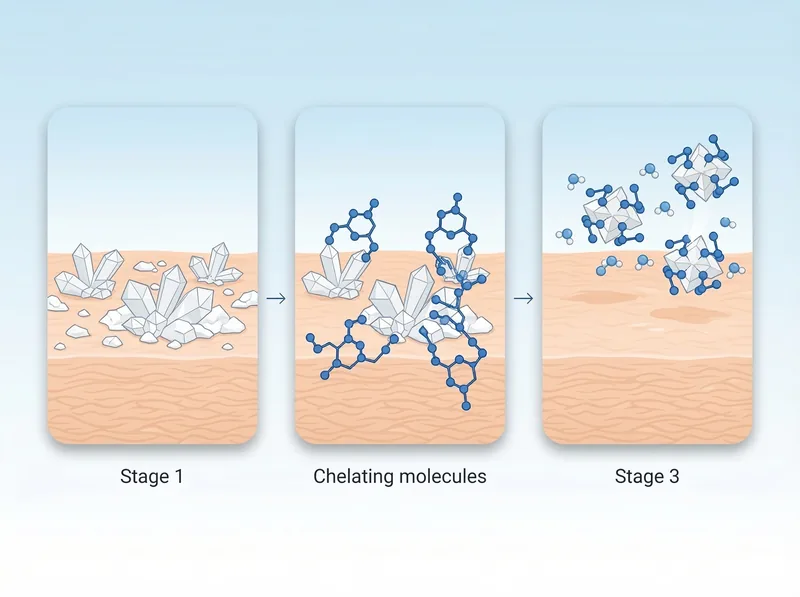 Chelating agents bind to hard water minerals, allowing them to be rinsed away instead of building up on skin
The Compounding Effect Nobody Warns You About
Hard water damage isn’t a single event. It’s cumulative. Every time you wash your face, you add another microscopic layer of mineral deposits. Over weeks and months, this builds into a significant barrier that fundamentally changes how your skin behaves.
Research from the International Journal of Cosmetic Science found that individuals in hard water areas (above 180 mg/L calcium carbonate) accumulated an average of 20-30mg of mineral deposits on facial skin daily. That might sound negligible, but it accumulates. After a month, you’re carrying nearly a gram of mineral buildup. After six months, you’ve fundamentally altered the surface chemistry of your skin.
This explains why skin problems in hard water regions tend to worsen gradually rather than appearing suddenly. You don’t wake up one day with compromised skin. It degrades slowly, almost imperceptibly, until you realize your entire routine has stopped working and you can’t figure out why. The eczema that was manageable becomes constant. The occasional dry patches become permanent. The products that used to absorb in seconds now sit on your skin for minutes.
And here’s the truly frustrating part: once mineral buildup reaches a certain threshold, even switching to soft water won’t immediately fix the problem. You have to actively remove the existing deposits before your skin can return to normal function. This is where chelation becomes essential.
What Chelation Actually Means for Your Skin
Chelation sounds technical, but the concept is straightforward. Chelating agents are molecules that bind to metal ions (like calcium and magnesium) and hold them in solution, preventing them from depositing on surfaces. In skincare, chelators grab onto the minerals in hard water and on your skin, allowing them to be rinsed away instead of building up.
Common chelating ingredients include EDTA (ethylenediaminetetraacetic acid), citric acid, gluconic acid, and phytic acid. These aren’t harsh or stripping. They’re gentle molecules that specifically target minerals without changeing your skin’s natural oils or proteins. A chelating cleanser works differently than a regular one: it removes the mineral film along with dirt and oil, rather than leaving deposits behind.
The difference is immediately noticeable. Your skin feels genuinely clean rather than tight. Products absorb within seconds rather than sitting on the surface. And because you’re removing the barrier that was blocking moisture retention, your skin actually stays hydrated between applications rather than feeling dry again an hour later.
For those dealing with scalp issues alongside skin problems, the same principle applies. Hard water affects your entire body, and chelation works systemically. A chelating shampoo like Regrowth+ can address mineral buildup on your scalp while a chelating facial cleanser handles your skin, tackling the problem from multiple angles.
Rebuilding Your Skin Barrier After Hard Water Damage
Removing mineral buildup is step one. Repairing the damage it caused is step two. Hard water doesn’t just create a physical barrier; it actively degrades your skin’s lipid layer, the mixture of ceramides, cholesterol, and fatty acids that keeps moisture in and irritants out.
When minerals change this layer, you develop what dermatologists call increased transepidermal water loss (TEWL). Essentially, moisture evaporates through your skin faster than it should, leaving you perpetually dehydrated no matter how much water you drink or how often you moisturise. Studies show that hard water exposure can increase TEWL by up to 35%, a significant enough change to trigger or worsen conditions like eczema, rosacea, and contact dermatitis.
Repairing this requires targeted ingredients. Ceramides are the gold standard because they’re identical to the lipids your skin naturally produces. A 2020 clinical trial published in the Journal of Dermatological Treatment found that ceramide-dominant moisturisers reduced TEWL by 42% and improved skin barrier function by 38% over eight weeks, significantly outperforming standard moisturisers. Look for products listing ceramide NP, ceramide AP, or ceramide EOP in the first five ingredients.
Niacinamide (vitamin B3) is another crucial player. It stimulates ceramide production, reduces inflammation, and helps restore the skin’s natural pH. A concentration of 4-5% is ideal for barrier repair. Pair this with a gentle, pH-balanced cleanser (ideally around 5.5) to avoid further changeing your skin’s acid mantle while the barrier rebuilds.
The Role of Water Quality in Long-Term Skin Health
Addressing hard water isn’t just about fixing current problems. It’s about preventing future damage. Chronic exposure to hard water has been linked to increased rates of eczema, particularly in children, and accelerated skin aging in adults. A landmark 2017 study from King’s College London followed 1,300 infants and found that those living in hard water areas were 87% more likely to develop eczema by age three months, with severity directly correlated to water hardness levels.
For adults, the aging connection is equally concerning. Hard water’s alkaline pH and mineral content accelerate the breakdown of collagen and elastin, the proteins that keep skin firm and resilient. A 2018 study in Clinical, Cosmetic and Investigational Dermatology found that women in hard water regions showed signs of photoaging (fine lines, roughness, uneven tone) an average of 3.2 years earlier than those in soft water areas, even when controlling for sun exposure and skincare habits.
This isn’t about vanity. It’s about the fundamental health of your body’s largest organ. Your skin is your first line of defense against environmental threats, and when hard water compromises that defense, you become more vulnerable to infections, allergies, and inflammatory conditions. The investment in water quality, whether through whole-house filtration, shower filters, or chelating products, pays dividends in long-term skin health.
Many expats in the Gulf region notice dramatic skin improvements during trips home, only to see problems return within days of coming back. That’s not coincidence. It’s your skin responding to water quality. The question becomes: do you want to address the root cause, or manage symptoms indefinitely?
Building a Hard Water-Proof Skincare Routine
An effective routine for hard water regions requires strategic layering. You can’t just swap one product and expect transformation. You need a system that addresses mineral removal, barrier repair, and ongoing protection.
Start with a chelating cleanser. This is non-negotiable. Use it both morning and night to prevent buildup. Follow immediately with a pH-balancing toner (around 5.5) to restore your skin’s natural acidity after exposure to alkaline water. This step is often skipped, but it’s crucial for allowing the rest of your products to work properly.
Next, apply a ceramide-rich serum or treatment. This goes on before your moisturiser because smaller molecules penetrate better. Look for formulas that combine ceramides with niacinamide for synergistic barrier repair. Give this layer 60 seconds to absorb before moving to the next step.
Your moisturiser should be chosen based on your skin type, but regardless of formula, it needs to contain both humectants and occlusives. In dry climates, occlusives are particularly important for sealing in the hydration you’ve just applied. Squalane, shea butter, and dimethicone are all effective options that won’t feel heavy if properly formulated. Finally, morning routines must end with broad-spectrum SPF 30 or higher. Hard water damage makes your skin more vulnerable to UV damage, and sun exposure will undo all your repair work if you skip this step.
References
- Hard Water Exposure and Skin Barrier Function: A Controlled Study - Journal of Investigative Dermatology
- Domestic Water Hardness and Eczema Prevalence in Early Life - King’s College London
- Ceramide-Dominant Barrier Repair Therapy: Clinical Outcomes - Journal of Dermatological Treatment
- Water Quality and Photoaging: A Comparative Analysis - Clinical, Cosmetic and Investigational Dermatology
- Mineral Accumulation on Skin: Mechanisms and Measurement - International Journal of Cosmetic Science