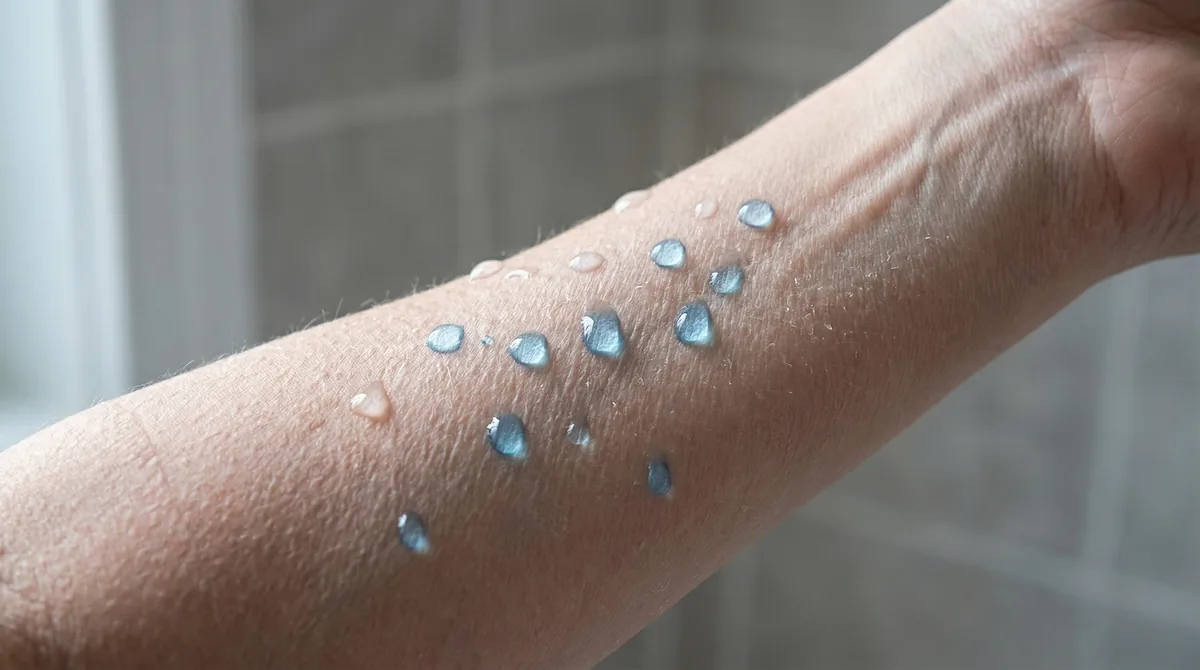
If you’ve moved to a region where desalinated water is the primary source and noticed your skin becoming progressively drier, tighter, or more sensitive, you’re not imagining it. What many expats and residents don’t realize is that the very process designed to make seawater drinkable also strips away minerals that your skin has quietly relied on for years.
Medically reviewed by Dr. Layla Hassan, Trichologist. The connection between desalinated water and skin dryness isn’t widely discussed, but it’s backed by dermatological research and water chemistry science. When you shower in water that’s been through reverse osmosis or distillation, you’re essentially bathing in H2O that’s been stripped to its molecular basics. No calcium. No magnesium. No trace minerals. Just pure water meeting your skin barrier, which evolved to interact with a much more complex mineral profile.
This article contains affiliate links. See our affiliate disclosure for details.
Here’s what happens: your skin’s protective barrier, the stratum corneum, maintains its integrity through a delicate balance of natural oils, dead skin cells, and minerals absorbed from your environment. When that mineral input suddenly drops to near zero, the barrier starts showing cracks. Literally. You might notice your moisturizer doesn’t sink in the way it used to, or that you’re applying lotion twice as often with half the results. The issue isn’t your skincare routine. It’s the water chemistry interacting with your skin’s natural processes in ways that weren’t a factor in your previous environment.
Key Takeaways
• Desalinated water lacks the essential minerals (calcium, magnesium, potassium) that support skin barrier function and hydration
• The demineralization process creates water with a neutral pH that can change your skin’s naturally acidic protective barrier (pH 4.5-5.5)
• Prolonged exposure to mineral-depleted water may compromise the lipid layer between skin cells, leading to increased transepidermal water loss
• Your skin adapts to local water chemistry over time, but desalinated water presents a unique challenge because it removes beneficial minerals rather than adding problematic ones
• Adjusting your skincare routine to compensate for mineral-depleted water requires barrier-supportive ingredients and pH-balancing products
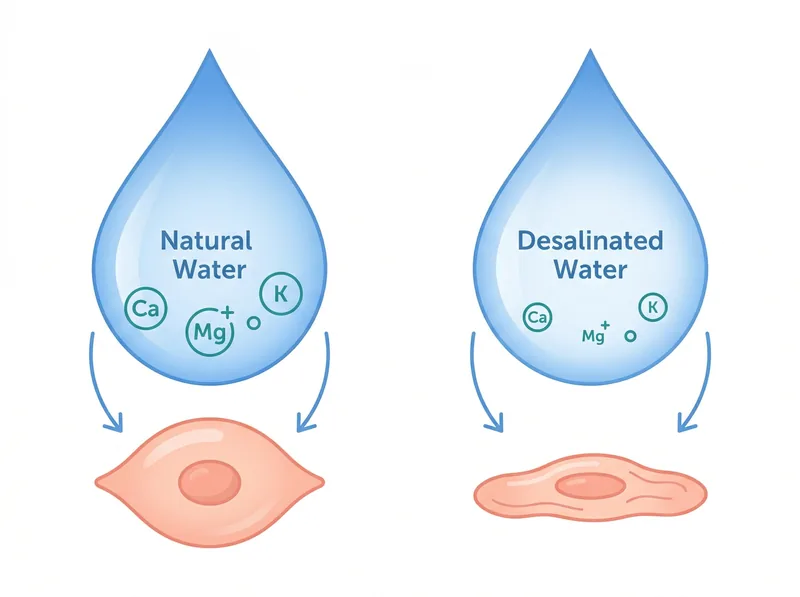 Desalinated water lacks the beneficial minerals found in natural water sources, which can impact skin hydration over time.
The Science of Desalination and What It Removes
Desalination plants use two primary methods: reverse osmosis and thermal distillation. Both processes are remarkably effective at removing salt, but they don’t stop there. They strip out nearly everything that isn’t pure H2O, including the minerals that naturally occur in freshwater sources.
According to the World Health Organization’s guidelines on drinking water quality, desalinated water typically contains less than 50 mg/L of total dissolved solids, compared to 150-500 mg/L in natural freshwater sources. That’s a dramatic reduction in mineral content. The minerals removed include calcium, magnesium, potassium, sodium, and trace elements like zinc and selenium, all of which play roles in skin health when absorbed topically during bathing.
Your skin doesn’t just sit there passively when you shower. Research published in the International Journal of Dermatology shows that the stratum corneum can absorb minerals from bathing water, particularly magnesium and calcium. These minerals help maintain the skin’s natural moisture factor and support the lipid barrier structure. When they’re absent, your skin loses a source of hydration support it may have been receiving for years without you realizing it.
The Gulf region, parts of Australia, Southern California, and increasingly Spain rely heavily on desalinated water. If you’ve relocated from a region with mineral-rich water to one of these areas, your skin is experiencing a significant environmental shift. It’s not about water quality in terms of safety. Desalinated water is perfectly safe to drink. But from a dermatological perspective, it’s missing components that benefit your skin’s barrier function.
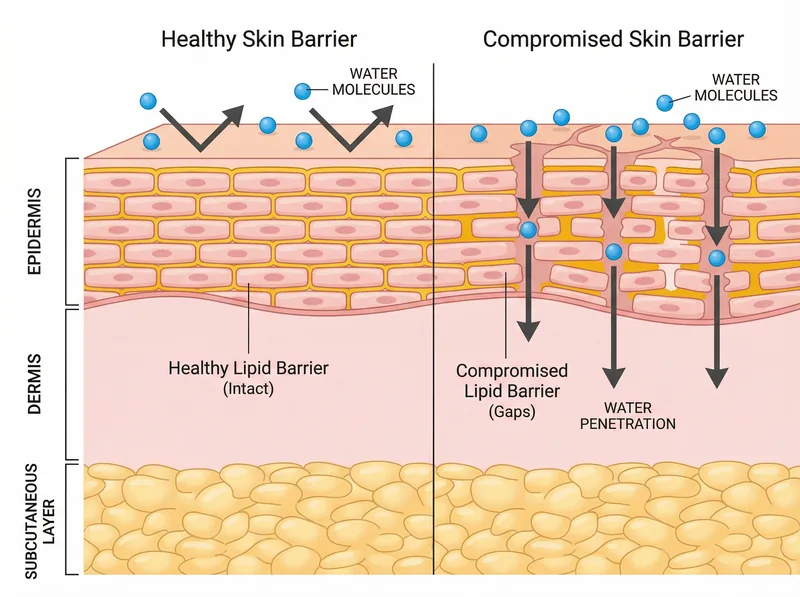 The skin barrier relies on a delicate balance of minerals and lipids that can be changeed by prolonged exposure to demineralized water.
How Mineral-Depleted Water Affects Your Skin Barrier
Your skin barrier is often described using the brick-and-mortar analogy: skin cells are the bricks, and lipids are the mortar holding them together. This structure prevents water loss from inside your body and keeps irritants from penetrating inward. Minerals from your environment, including bathing water, contribute to maintaining this structure.
When you shower in desalinated water, you’re removing your skin’s natural oils without replacing any of the mineral content that would normally be present in the rinse water. Studies on hard water versus soft water effects on skin show that extremely soft water (which desalinated water essentially is) can leave a film-like feeling because soap doesn’t rinse away as completely. But the bigger issue is what’s not being deposited.
Magnesium, for example, is known to support the skin’s barrier repair mechanisms. Research in the Journal of the American Academy of Dermatology indicates that magnesium deficiency can impair skin barrier recovery after damage. When your bathing water contains no magnesium, you’re missing one pathway of topical mineral absorption that might have been supporting your skin’s resilience.
The result? Increased transepidermal water loss. Your skin loses moisture faster than it can replace it, even if you’re drinking adequate water. You might notice this as persistent dryness, flaking, increased sensitivity to products that never bothered you before, or a tight, uncomfortable feeling that doesn’t resolve even after moisturizing. For those dealing with both desalinated water and the Gulf’s low humidity, the effect compounds. You can read more about hydration challenges in extreme climates to understand the full environmental picture.
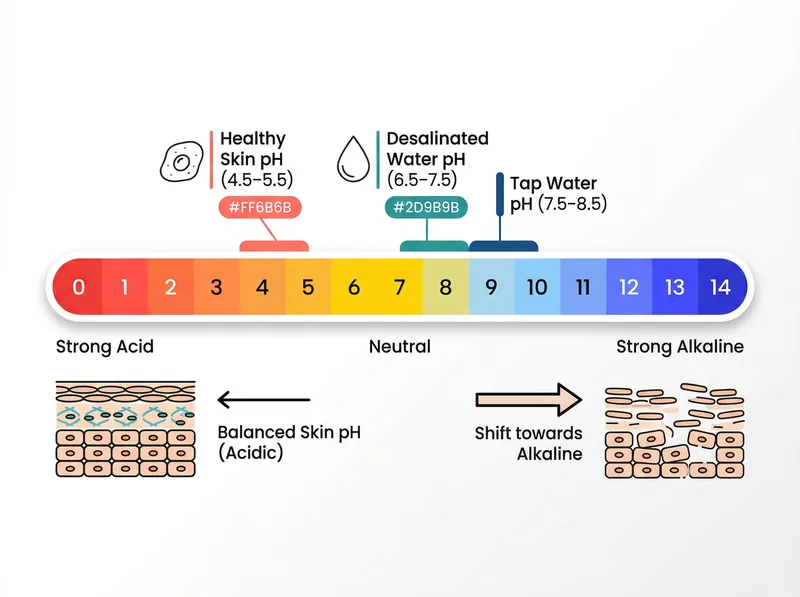 Desalinated water’s neutral pH can change your skin’s naturally acidic protective barrier over time.
The pH Problem: Why Neutral Water Isn’t Neutral for Skin
Healthy skin maintains an acidic pH between 4.5 and 5.5, often called the acid mantle. This slightly acidic environment is crucial for barrier function, enzyme activity, and keeping harmful bacteria at bay. Desalinated water, however, typically has a neutral to slightly alkaline pH of 6.5 to 7.5.
Every time you shower, you’re temporarily shifting your skin’s pH upward. For most people with healthy skin barriers, this isn’t catastrophic because your skin can reacidify itself within a few hours. But if you’re showering daily in desalinated water while also dealing with dry air, sun exposure, and possibly other environmental stressors, your skin may not fully recover its optimal pH between exposures.
Research from the British Journal of Dermatology demonstrates that prolonged pH improvion can compromise the skin barrier’s lipid processing and increase susceptibility to irritants and allergens. The study found that even small pH increases maintained over time can lead to measurable barrier dysfunction.
This is where the mineral content of water becomes relevant again. Natural water sources contain minerals that can buffer pH. Desalinated water lacks these buffers, meaning it can more easily change your skin’s acid mantle without any counterbalancing effect. If you’re using alkaline soaps or cleansers on top of this, you’re compounding the pH changeion. The solution isn’t to stop showering (obviously), but to understand that your post-shower skincare needs to actively support pH rebalancing and barrier repair.
Recognizing Desalinated Water’s Effects on Your Skin
The symptoms of desalinated water exposure aren’t always obvious at first. They tend to develop gradually over weeks or months as your skin’s barrier slowly becomes compromised. Here’s what to watch for: persistent dryness that doesn’t improve with your usual moisturizer, a tight or itchy feeling after showering that lasts longer than 30 minutes, increased sensitivity to products you’ve used for years without issue, or visible flaking and rough texture, particularly on your arms, legs, and torso.
You might also notice that your skin looks dull or feels rough to the touch, even immediately after moisturizing. This happens because the compromised barrier isn’t allowing products to penetrate effectively. The lipid layer between your skin cells has gaps, so hydrating ingredients can’t reach the deeper layers of the stratum corneum where they’re needed most.
Some people develop what looks like mild eczema or contact dermatitis, particularly in areas where water sits on the skin longest during showering (shoulders, back, chest). This isn’t necessarily an allergic reaction. It’s barrier dysfunction manifesting as inflammation. According to dermatological research published in Dermatitis journal, compromised skin barriers are more susceptible to irritant contact dermatitis, even from substances that wouldn’t normally cause problems.
If you’re experiencing any of these symptoms and you’ve recently moved to an area with desalinated water, the connection is worth investigating. The good news is that barrier-focused skincare can make a significant difference, even if you can’t change your water source.
Adjusting Your Skincare for Mineral-Depleted Water
The first step is accepting that your previous skincare routine may not be sufficient anymore. Your skin’s environmental inputs have changed, so your outputs need to adjust. Focus on barrier repair rather than just hydration. Hydration products add water to your skin, but if your barrier is compromised, that water evaporates quickly. Barrier repair products help your skin hold onto moisture.
Look for ingredients that support the lipid barrier: ceramides, cholesterol, and fatty acids. These are the building blocks of the mortar between your skin cells. Products containing these ingredients can help compensate for the barrier support you’re no longer getting from mineral-rich water. The American Academy of Dermatology recommends applying moisturizer immediately after bathing while skin is still damp to lock in moisture.
Consider adding a pH-balancing toner or essence after cleansing. These products help restore your skin’s acid mantle more quickly after the pH changeion of showering. Look for formulations with a pH between 4.5 and 5.5. Ingredients like lactic acid, glycolic acid (in low concentrations), or fermented extracts can support pH rebalancing while also providing gentle exfoliation to remove the buildup of dead skin cells that accumulates when barrier function is impaired.
For those dealing with scalp dryness alongside skin issues, the same water chemistry affecting your skin is likely affecting your scalp. A chelating shampoo like Regrowth+ can help remove any residual mineral deposits if you’re in an area where desalinated and hard water sources are mixed, while also preparing your scalp to better absorb moisturizing treatments. Your scalp is skin too, and it faces the same barrier challenges as the rest of your body.
Practical Adaptations: Showering and Bathing Strategies
Beyond product selection, how you shower matters when dealing with mineral-depleted water. Shorter showers with lukewarm rather than hot water minimize barrier changeion. Hot water strips your skin’s natural oils more aggressively, and when you’re already dealing with water that provides no mineral compensation, you’re doubling down on barrier stress.
Pat your skin dry rather than rubbing vigorously. Rubbing with a towel can damage the already compromised lipid layer between skin cells. Leave your skin slightly damp and apply your barrier-repair moisturizer immediately. This technique, called the soak-and-seal method, helps trap water in your skin before it evaporates.
Some people find benefit in adding mineral-rich bath salts to occasional baths (not showers, where they’d rinse away too quickly). Epsom salts (magnesium sulfate) or Dead Sea salts can provide topical mineral exposure that partially compensates for what’s missing in your regular water supply. Research on magnesium absorption through skin suggests that bathing in magnesium-rich solutions can increase skin magnesium levels, though this shouldn’t replace dietary magnesium intake.
Be strategic about when you shower. If possible, shower in the evening rather than morning, so your skin has overnight to repair and rebalance its pH before facing environmental stressors like sun and dry air. Your skin’s barrier repair processes are most active during sleep, according to chronobiology research, so giving it a head start by applying barrier-supportive products before bed can maximize recovery.
When to Seek Professional Help
Most people can manage desalinated water’s effects on their skin through routine adjustments and targeted product selection. But if you’re experiencing severe dryness, cracking, bleeding, persistent itching that interferes with sleep, or signs of infection (redness, warmth, oozing), it’s time to consult a dermatologist.
These symptoms suggest your skin barrier is severely compromised and may need medical intervention beyond over-the-counter skincare. A dermatologist can prescribe barrier-repair creams with higher concentrations of active ingredients, or identify if you’ve developed secondary conditions like eczema or contact dermatitis that require specific treatment.
It’s also worth getting a professional evaluation if you’ve adjusted your routine for 6-8 weeks without seeing improvement. Persistent skin issues can have multiple causes, and what appears to be a water-related problem might have an underlying component (like nutritional deficiency, hormonal changes, or an undiagnosed skin condition) that needs to be addressed separately.
For expats dealing with multiple environmental stressors simultaneously, the cumulative effect on skin health can be significant. If you’re also experiencing stress-related symptoms or other health changes since relocating, consider a complete health check rather than treating skin issues in isolation. Your skin is often the visible manifestation of systemic changes happening throughout your body.
References
- Guidelines for Drinking-water Quality: Fourth Edition Incorporating the First and Second Addenda - World Health Organization
- The Effect of Hard Water on Skin Barrier Function - International Journal of Dermatology
- Skin pH and Barrier Function - British Journal of Dermatology
- Magnesium and Skin Barrier Recovery - Journal of the American Academy of Dermatology
- Dermatologists’ Top Tips for Relieving Dry Skin - American Academy of Dermatology