If your hair feels thinner, breaks more easily, or grows slower than it used to, the problem might not be your shampoo or the hard water. It might be that you’re not eating enough protein. And if you live in a hot climate where you’re sweating daily, working out in the heat, or constantly battling the environmental stress of extreme temperatures, your protein needs are higher than the standard nutritional guidelines account for.
This article contains affiliate links. See our affiliate disclosure for details.
Hair is 95% protein. Specifically, it’s made of keratin, a structural protein your body synthesizes from the amino acids you consume. When your protein intake is inadequate, your body prioritizes vital functions like immune response and muscle repair over non-essential processes like hair growth. Your hair gets deprioritized. It’s one of the first places protein deficiency shows up, often months before you’d notice muscle loss or other symptoms.
Women in hot climates face a unique nutritional challenge. You’re losing more protein through sweat than women in temperate zones. You’re expending more energy to thermoregulate. If you’re active, your muscles are working harder in the heat, increasing protein turnover. And if you’re dealing with chronic stress or changeed sleep, your body’s demand for amino acids increases further. Standard protein recommendations don’t account for any of this.
Key Takeaways
• Women in hot climates need 15-25% more protein than standard guidelines due to increased sweat loss and metabolic demands from thermoregulation
• Hair is 95% keratin protein, making it one of the first visible indicators of inadequate protein intake, often showing deficiency months before other symptoms
• The standard 0.8g/kg recommendation is a minimum for sedentary women in temperate climates; active women in heat may need 1.2-1.8g/kg daily
• Protein timing matters: distribute intake across 3-4 meals with 25-35g per meal for optimal muscle protein synthesis and hair follicle support
• Animal proteins provide complete amino acid profiles and higher bioavailability; plant-based women need strategic combining and 10-20% higher total intake
Why Standard Protein Guidelines Don’t Apply in Hot Climates
The widely cited recommendation of 0.8 grams of protein per kilogram of body weight per day comes from studies conducted in controlled laboratory conditions with sedentary participants in temperate climates. It’s designed as a minimum to prevent deficiency, not to support optimal health or account for environmental stressors.
In hot climates, your body loses nitrogen through sweat at significantly higher rates. Research published in the Journal of Applied Physiology found that athletes training in heat lost 30-40% more nitrogen through sweat compared to those training in moderate temperatures. That nitrogen loss represents amino acids your body needs to rebuild.
Thermoregulation itself is metabolically expensive. Your body expends additional energy to maintain core temperature when ambient temperature exceeds 30°C. This increases your baseline metabolic rate and, consequently, your protein requirements to maintain lean tissue.
If you’re physically active in the heat, the compounding effect is substantial. A 60kg woman doing moderate exercise in a temperate climate might need 72-90g of protein daily. That same woman exercising in 40°C heat with high humidity could need 90-110g to maintain the same recovery and tissue maintenance. The difference matters for your hair, your muscle mass, and your energy levels.
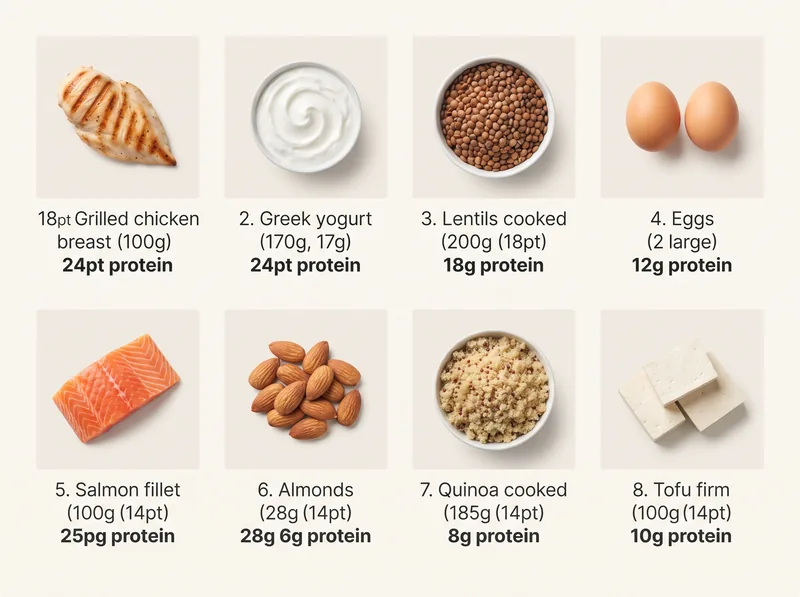 Common protein sources and their bioavailable protein content per serving for women in hot climates
How Protein Deficiency Shows Up in Your Hair First
Your body is ruthlessly efficient at resource allocation during scarcity. When protein intake is inadequate, your liver prioritizes amino acid distribution to essential functions: immune cells, enzymes, hormones, muscle repair. Hair growth is non-essential from a survival perspective, so it gets cut off early.
The hair growth cycle has three phases: anagen (growth), catagen (transition), and telogen (rest). Adequate protein is required to keep follicles in the anagen phase. When protein is scarce, follicles prematurely shift into telogen, a process called telogen effluvium. You won’t notice this immediately because hair doesn’t fall out until 2-3 months after the follicle enters telogen. By the time you see increased shedding, you’ve been protein-deficient for months.
Beyond shedding, low protein affects hair structure. Each strand is built from keratin synthesized in the follicle. When amino acid availability is limited, the keratin structure is weaker. Your hair becomes more brittle, breaks more easily, and loses elasticity. It can’t hold moisture as effectively, so it looks dull and feels dry even if you’re using good products.
If you’ve noticed your hair breaking at the mid-lengths, snapping when you brush it, or developing more split ends despite regular trims, protein deficiency is a likely contributor. This is especially common in women who’ve recently increased their exercise, moved to a hotter climate, or shifted to a lower-protein diet without adjusting total intake.
Calculating Your Actual Protein Needs
Start with your body weight in kilograms. For a sedentary woman in a hot climate with no specific health goals, aim for 1.0-1.2g per kg. That’s already 25-50% higher than the standard 0.8g/kg minimum because you’re accounting for increased sweat loss and metabolic demand from heat.
If you’re moderately active (exercising 3-5 times per week), increase to 1.2-1.6g per kg. If you’re very active or doing strength training in the heat, go to 1.6-1.8g per kg. These ranges align with recommendations from the World Health Organization for active populations, adjusted upward for environmental stress.
A 65kg woman who’s moderately active in a hot climate should target 78-104g of protein daily. That’s roughly 25-35g per meal if you’re eating three times a day, or 20-26g per meal plus a snack if you eat four times. The distribution matters because your body can only process and use about 25-40g of protein per meal for muscle protein synthesis.
If you’re recovering from illness, dealing with chronic stress, or experiencing postpartum hair loss, your needs may be at the higher end of the range or even beyond it. Stress increases cortisol, which accelerates protein breakdown. Illness increases inflammatory cytokines, which do the same. Your body needs more raw material to keep up.
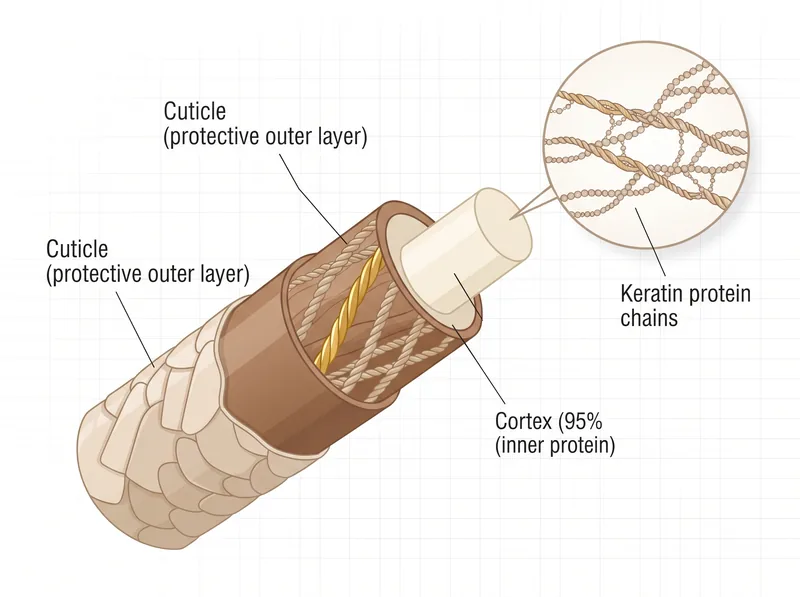 Hair is 95% protein (keratin), making adequate protein intake essential for hair strength and growth
Protein Quality and Bioavailability: Why Source Matters
Not all protein is created equal. Your body can’t use protein directly; it has to break it down into amino acids first. The efficiency of that process and the amino acid profile of the protein determine how much your body can actually use.
Animal proteins (meat, fish, eggs, dairy) are complete proteins, meaning they contain all nine essential amino acids in ratios that closely match human tissue. They also have higher bioavailability, typically 90-95%. Your body can extract and use almost all of the protein content. A 100g chicken breast listed as containing 31g of protein will yield close to 30g of usable amino acids.
Plant proteins are often incomplete, lacking one or more essential amino acids, and have lower bioavailability due to anti-nutritional factors like phytates and fiber. Lentils, for example, are about 70-75% bioavailable. If you eat 200g of cooked lentils with 18g of protein, you’re getting about 13-14g of usable amino acids. This doesn’t make plant proteins inferior, but it does mean you need to eat more total protein to hit the same effective intake.
If you’re vegetarian or vegan, you need to be strategic. Combine complementary proteins (rice and beans, hummus and whole grain bread) to ensure you’re getting all essential amino acids. And aim for 10-20% higher total protein intake to compensate for lower bioavailability. A plant-based woman needing 90g of effective protein should target 100-110g of total protein from food.
Protein Timing and Distribution for Hair and Muscle
Your body doesn’t store protein the way it stores carbohydrates or fat. Excess amino acids are oxidized for energy or converted to glucose. This means you can’t load up on protein once a day and expect your body to ration it out. You need consistent intake spread across the day.
Research on muscle protein synthesis shows that consuming 25-35g of protein per meal maximizes the anabolic response. Below 20g, you’re not fully stimulating synthesis. Above 40g in a single sitting, you’re not getting additional benefit for muscle building, though the protein isn’t wasted; it’s used for other metabolic processes.
For hair health specifically, consistent amino acid availability matters because hair follicles are constantly synthesizing keratin during the anagen phase. A follicle that’s protein-starved for part of the day will produce weaker keratin structure during that window, creating a weak point in the hair shaft that can break months later when that section emerges from the scalp.
Practically, this means eating protein at every meal. Breakfast should include 25-30g (eggs, Greek yogurt, protein smoothie). Lunch and dinner should each have 25-35g (chicken, fish, legumes, tofu). If you’re active or at the higher end of protein needs, add a snack with 15-20g (cottage cheese, nuts, protein shake). This keeps your amino acid pool consistently replenished.
Common Protein Deficiency Patterns in Hot Climates
Many women in hot climates unintentionally under-eat protein because heat suppresses appetite. You’re less hungry, so you gravitate toward lighter meals: salads, fruit, cold soups. These are often carbohydrate-heavy and protein-light. A typical lunch of mixed greens, cucumber, tomato, and vinaigrette might contain only 5-8g of protein. You’d need to eat that meal five times to hit even a modest protein target.
Another pattern is relying too heavily on snack-based eating. Grabbing handfuls of nuts, energy bars, or crackers throughout the day feels like you’re eating enough, but the protein content is low relative to calories. A 200-calorie serving of almonds contains only 6g of protein. A protein bar might have 10-12g but also 20g of sugar. You’re filling up without meeting protein needs.
Women who exercise early in the morning to avoid heat often skip breakfast or have only coffee and fruit. Then they’re protein-deficient for the first 4-6 hours of the day, exactly when their muscles are trying to recover from the workout. This pattern alone can explain persistent fatigue, slow recovery, and hair that won’t grow past a certain length.
If you’ve recently moved to a hot climate, your appetite might still be adjusting. You’re eating less overall, but you haven’t consciously increased the protein density of what you are eating. The result is a slow drift into deficiency that manifests first as fatigue, then as hair changes, then eventually as muscle loss if it continues long enough. Before using a chelating shampoo like Regrowth+ to address mineral buildup from hard water, make sure your protein foundation is solid. Environmental damage and nutritional deficiency often compound each other.
Practical High-Protein Meal Strategies
Start with your protein source and build the meal around it. Choose the protein first (chicken, fish, eggs, tofu, legumes), portion it to hit 25-35g, then add vegetables, grains, and fats. This ensures you’re meeting the target rather than hoping you’ll get enough protein from side dishes.
Batch-cook protein sources at the start of the week. Grill 1kg of chicken breast, hard-boil a dozen eggs, cook a large pot of lentils. Store them in the fridge and add them to meals throughout the week. This removes the friction of cooking protein from scratch every time you’re hungry, which is when you’re most likely to default to easier, lower-protein options.
Use protein-dense breakfast options that don’t require appetite: Greek yogurt with nuts and berries (25g protein), scrambled eggs with cheese (20g protein), protein smoothie with whey or pea protein powder (25-30g). These are easier to consume in the morning than a heavy meal, but they still deliver the amino acids your body needs.
For women who struggle to eat enough solid food in the heat, liquid protein can help. A post-workout protein shake, a mid-afternoon smoothie with protein powder, or even a glass of milk with a meal adds 15-25g of highly bioavailable protein without requiring much appetite or digestion capacity. Just avoid relying on this exclusively; whole food protein sources provide additional nutrients (iron, B vitamins, zinc) that are important for hair health.
Protein and Other Nutrients: The Hair Growth Stack
Protein doesn’t work in isolation for hair health. You also need adequate iron, zinc, B vitamins (especially biotin and B12), and vitamin C to synthesize keratin and support follicle function. Protein is the raw material, but these micronutrients are the construction crew.
Iron deficiency is extremely common in women and directly impairs hair growth even when protein intake is adequate. Ferritin (stored iron) below 40-50 ng/mL is associated with increased hair shedding. If you’re eating enough protein but your hair is still struggling, get your ferritin checked. Many women need supplementation to reach optimal levels, especially if they have heavy menstrual periods or don’t eat much red meat.
Zinc is required for protein synthesis and hair follicle health. It’s found in high amounts in oysters, red meat, and pumpkin seeds. Vegetarians and vegans are at higher risk of zinc deficiency because plant-based zinc is less bioavailable. If you’re plant-based and experiencing hair issues despite adequate protein, consider a zinc supplement (15-30mg daily).
Vitamin C enhances iron absorption and is required for collagen synthesis, which provides structural support to hair follicles. In hot climates where fresh produce is abundant, this is usually not a limiting factor, but if your diet is heavily processed or you’re not eating fruits and vegetables regularly, it could be. A simple way to cover your bases is to take a well-formulated multivitamin designed for women’s hair and skin health, ensuring you’re not deficient in any co-factors that protein metabolism depends on.
References
- Protein and amino acid requirements in human nutrition: Report of a joint WHO/FAO/UNU expert consultation - World Health Organization
- Influence of hydration and electrolyte supplementation on incidence and time to onset of exercise-associated muscle cramps - Journal of Athletic Training
- Dietary protein intake and human health - Food & Function Journal
- International Society of Sports Nutrition Position Stand: protein and exercise - Journal of the International Society of Sports Nutrition