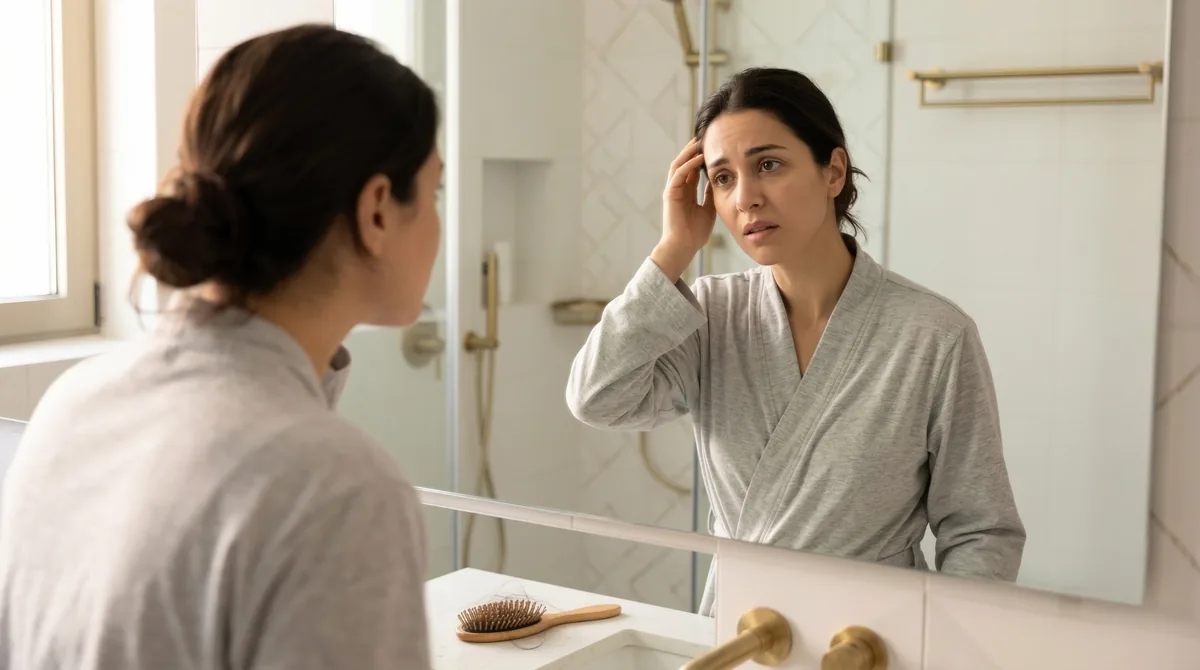
You’re three months postpartum, and every time you shower, the drain catches what looks like an entire ponytail. When you run your fingers through your hair, strands come away in clumps. You knew some hair loss was normal after having a baby, but this feels different. More aggressive. And you can’t shake the feeling that something about living in the Gulf is making it worse.
You’re right to trust that instinct. This article contains affiliate links. See our affiliate disclosure for details.
Postpartum hair loss, clinically called telogen effluvium, affects up to 90% of new mothers. It’s a natural hormonal shift. But when you’re dealing with the Gulf’s extremely hard water, high mineral content, and intense heat, you’re facing a compounding problem that most postpartum advice doesn’t address. The water here doesn’t just affect your hair. It actively interferes with your body’s already changeed recovery process.
Key Takeaways
• Postpartum hair loss (telogen effluvium) is triggered by the sudden drop in estrogen after delivery, causing 30-50% of hair follicles to enter the shedding phase simultaneously, typically peaking 3-4 months postpartum
• Hard water in the Gulf contains 200-400+ mg/L of calcium and magnesium, which coat already weakened postpartum hair strands, making them more prone to breakage and creating the appearance of more severe hair loss
• The combination of hormonal shedding and mineral buildup creates a dual stress on hair follicles that can extend the recovery period from the typical 6-12 months to 12-18 months in hard water regions
• Chelating shampoos that remove mineral deposits can reduce mechanical breakage by up to 40%, allowing your natural postpartum regrowth cycle to proceed without environmental interference
• Most postpartum hair loss resolves completely within 12 months, but addressing hard water damage early prevents the compounding effect that makes recovery feel impossible
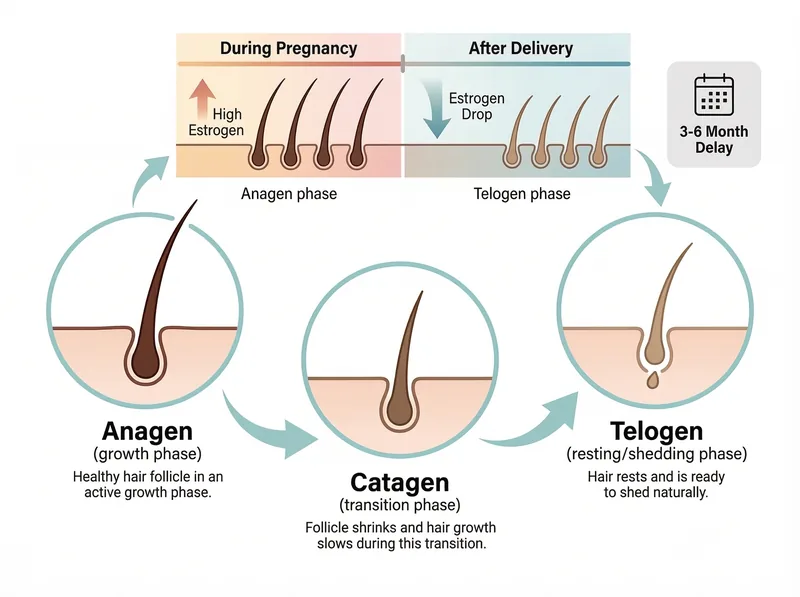 The postpartum hair cycle: how hormonal shifts trigger telogen effluvium approximately three months after delivery
What’s Actually Happening to Your Hair After Birth
During pregnancy, improved estrogen levels keep your hair in the growth phase longer than normal. You probably noticed your hair felt thicker, fuller, and grew faster. That wasn’t new growth. It was hair that should have been shedding all along, held in place by hormones.
After delivery, estrogen levels plummet. Within weeks, they return to pre-pregnancy baseline. This hormonal crash signals 30-50% of your hair follicles to enter telogen (the resting phase) simultaneously. Three to four months later, all that hair sheds at once. It’s not hair loss. It’s delayed shedding catching up.
Research published in the Journal of Clinical and Aesthetic Dermatology confirms that postpartum telogen effluvium peaks between 3-4 months after delivery and typically resolves within 6-12 months. Your body is designed to recover from this. The hair follicles aren’t damaged. They’re just cycling through a backlog.
But here’s what the studies don’t account for: environmental stress. The research on postpartum hair loss comes primarily from temperate climates with soft to moderately hard water. The Gulf’s water hardness levels (often exceeding 300 mg/L of total dissolved solids) create a mechanical stress on hair that compounds the hormonal changeion.
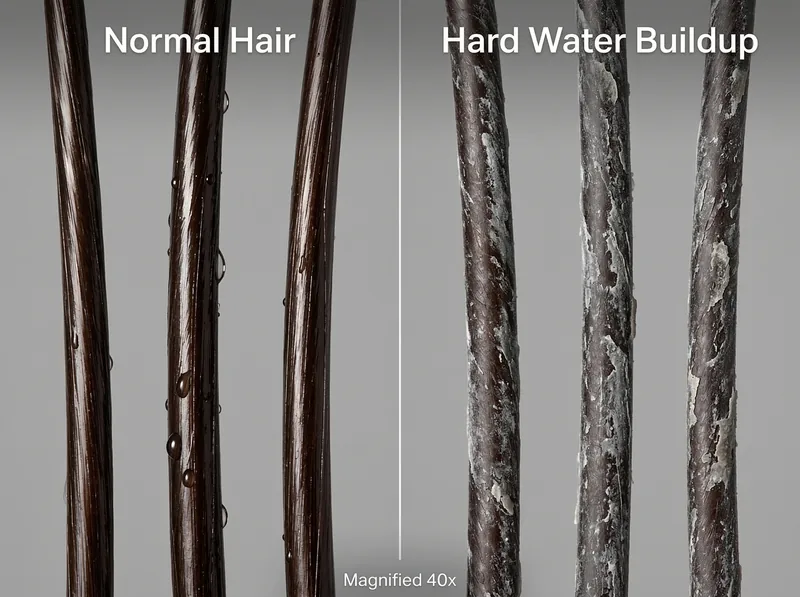 Hard water mineral deposits on hair strands can compound postpartum shedding by weakening already fragile hair
How Hard Water Compounds Postpartum Shedding
Postpartum hair is already fragile. The sudden shift from anagen to telogen weakens the hair shaft’s structural integrity. The cuticle layer becomes more porous and vulnerable to damage. In soft water, this is manageable. In hard water, it becomes a compounding problem.
Hard water contains high concentrations of calcium carbonate, magnesium sulfate, and other minerals. When you wash your hair, these minerals don’t rinse away. They bind to the hair shaft, forming a coating that makes hair rough, tangled, and prone to breakage. This same mineral buildup affects your skin barrier, but the impact on hair is more visible.
A study from the International Journal of Trichology found that hard water increases hair surface roughness by up to 30% and reduces tensile strength (the force required to break a hair strand) by nearly 15%. When you’re already losing hair hormonally, the added mechanical breakage from mineral-coated strands makes the shedding appear more severe than it actually is.
You’re not imagining that your hair feels different here. The water is actively changing its texture and strength. And when you’re postpartum, dealing with sleep deprivation and hormonal chaos, you don’t have the resilience to compensate for environmental damage the way you might have pre-pregnancy.
Why the Gulf’s Climate Makes Recovery Harder
The Gulf’s environmental factors create a perfect storm for prolonged postpartum hair issues. High heat (often exceeding 45°C in summer) increases scalp perspiration, which mixes with hard water mineral deposits to form a sticky residue that clogs follicles. Low humidity (sometimes dropping below 20%) dehydrates hair shafts that are already compromised by hormonal changes.
Indoor air conditioning, while necessary, creates additional stress. The constant temperature shifts between 45°C outdoor heat and 18°C indoor cooling cause the hair cuticle to expand and contract repeatedly, leading to cuticle damage and increased porosity. This makes your hair even more susceptible to mineral absorption from washing.
There’s also the stress factor. Postpartum recovery in the Gulf often means isolation from extended family support systems, adjustment to extreme heat with a newborn, and limited outdoor activity during peak sun hours. Chronic stress is a known trigger for telogen effluvium, and it can extend the shedding phase beyond the typical 6-month window.
The combination isn’t just additive. It’s multiplicative. Hormonal hair loss plus hard water plus heat stress plus emotional stress creates a recovery timeline that can stretch from the expected 6-12 months to 12-18 months or longer.
What Actually Helps (And What Doesn’t)
Most postpartum hair loss advice focuses on nutrition, supplements, and patience. That’s valid. Your body needs adequate protein, iron, and B vitamins to support hair regrowth. But if you’re dealing with hard water, no amount of biotin will compensate for the mechanical damage happening every time you wash your hair.
The most effective intervention is removing the environmental stressor. A chelating shampoo like Regrowth+ uses ingredients like EDTA or citric acid to bind to the calcium and magnesium deposits on your hair shaft and lift them away. This doesn’t stop the hormonal shedding, but it prevents the added breakage that makes postpartum hair loss feel catastrophic.
Shower filters are often recommended, but most residential filters don’t effectively remove dissolved minerals. They may reduce chlorine and sediment, but calcium and magnesium pass through. The chelation needs to happen on the hair itself, not in the water supply.
What doesn’t help: expensive salon treatments, keratin masks, or protein treatments while you still have mineral buildup. You’re essentially sealing the damage in. Remove the minerals first. Then focus on strengthening and moisturizing.
The Nutrition and Supplement Reality
Postpartum nutrient depletion is real. Pregnancy and breastfeeding drain your iron stores, B vitamins, and protein reserves. But here’s the hard truth: if you’re severely deficient, you’ll see hair thinning across your entire scalp, not just the hormonal shedding pattern (which typically affects the frontal hairline and temples most noticeably).
Iron deficiency is particularly common postpartum, especially if you experienced significant blood loss during delivery. Ferritin levels below 40 ng/mL are associated with increased hair shedding, and many postpartum women fall well below this threshold. A simple blood test can confirm whether supplementation is necessary.
Vitamin D is another concern in the Gulf. Despite abundant sunshine, vitamin D deficiency is counterintuitively common in sun-heavy climates due to indoor lifestyles and cultural dress practices. Low vitamin D affects hair follicle cycling and can prolong telogen effluvium.
But supplements alone won’t solve hard water damage. They support your body’s internal recovery. You still need to address the external environmental stress. Think of it as a two-front approach: internal support through nutrition and external protection through water quality management.
When to Worry (And When Not To)
Most postpartum hair loss, even when it feels extreme, resolves on its own. If you’re shedding started around 3-4 months postpartum, affects the frontal hairline and temples most noticeably, and you can see fine new growth (baby hairs) along your hairline, you’re experiencing normal telogen effluvium. It will pass.
Red flags that warrant medical consultation: hair loss that starts immediately after delivery (not months later), shedding that continues beyond 12 months postpartum without any sign of regrowth, bald patches or circular areas of hair loss (which could indicate alopecia areata), or hair loss accompanied by other symptoms like extreme fatigue, weight changes, or cold intolerance (which could indicate thyroid dysfunction).
Postpartum thyroiditis affects up to 10% of new mothers and can cause hair loss that mimics telogen effluvium but doesn’t resolve on the expected timeline. If you’re still shedding heavily at 9-12 months postpartum, ask your doctor to check your thyroid function (TSH, Free T3, Free T4) and ferritin levels.
Don’t let anyone dismiss your concerns with ‘it’s just postpartum hair loss, it’ll grow back.’ Yes, it usually does. But you deserve support and practical solutions while you’re going through it, not just reassurance that it’s temporary. The distress is real, even if the condition is benign.
Practical Daily Hair Care for Postpartum Recovery
You don’t need a complicated routine. You need a protective one. Start with chelating shampoo 2-3 times per week to remove mineral buildup. On non-wash days, use a gentle dry shampoo or simply rinse with water. Over-washing strips natural oils that protect your already fragile hair.
When you do wash, use lukewarm water, not hot. Hot water opens the hair cuticle, making it more porous and susceptible to mineral absorption. Finish with a cool rinse to seal the cuticle. Pat your hair dry with a microfiber towel instead of rubbing, which causes friction and breakage on mineral-coated strands.
Avoid tight hairstyles. The tension from ponytails, buns, or braids can cause traction alopecia on top of your existing hormonal hair loss. If you need your hair up (and with a newborn, you probably do), use soft scrunchies and vary the position of your ponytail to distribute tension.
Be gentle with detangling. Use a wide-tooth comb on wet hair, starting from the ends and working up to the roots. Mineral buildup makes hair tangle more easily, so you’ll need more patience than usual. Consider a leave-in conditioner to provide slip and reduce friction during combing.
The Emotional Reality Nobody Talks About
Postpartum hair loss is physically benign, but emotionally devastating. You’re already dealing with body changes, sleep deprivation, and the overwhelming responsibility of caring for a newborn. Watching your hair fall out in handfuls feels like losing the last piece of your pre-baby self.
The Gulf’s expatriate community can make this harder. You’re often isolated from family support, adjusting to an unfamiliar climate, and comparing yourself to other mothers who seem to have it all together. Social media doesn’t help. You see perfectly styled hair on other new mothers and wonder what you’re doing wrong.
You’re not doing anything wrong. The environmental factors here are real, and they compound a process that’s already difficult. Give yourself permission to feel upset about it. Hair is tied to identity and femininity in ways that are deeply personal. Losing it, even temporarily, is a legitimate grief.
If the hair loss is affecting your mental health, talk to your doctor. Postpartum depression and anxiety can be triggered or worsened by physical changes that feel out of your control. There’s no shame in asking for support, whether that’s counseling, medication, or just acknowledgment that this is harder than it should be.
References
- Postpartum Telogen Effluvium: A Review of the Literature - Journal of Clinical and Aesthetic Dermatology
- The Role of Vitamins and Minerals in Hair Loss: A Review - Dermatology and Therapy
- Stress and Hair Loss: Are They Related? - American Journal of Clinical Dermatology
- Iron Deficiency and Hair Loss: The Connection - Journal of Korean Medical Science
- Hard Water and Hair: The Effect of Water Hardness on Hair Properties - International Journal of Trichology