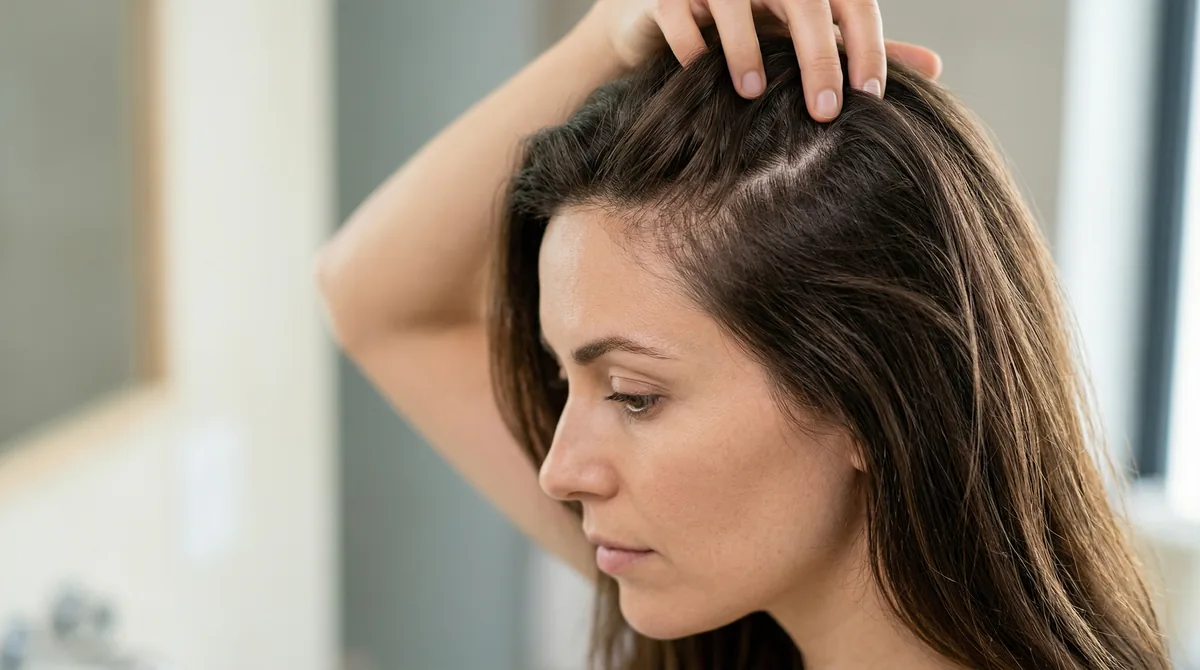
You’ve been using the same hair products that worked perfectly in your previous location. But now your scalp feels tight, itchy, or constantly irritated. You’re dealing with flakes that won’t quit, or an oiliness that appears hours after washing. Here’s what most people don’t realize: your scalp is responding to environmental factors you can’t see, and it’s trying to tell you something’s wrong.
This article contains affiliate links. See our affiliate disclosure for details.
Medically reviewed by Dr. Layla Hassan, Trichologist
Your scalp is skin. And like the skin on your face, it reacts to everything it encounters: water chemistry, mineral content, humidity levels, and heat exposure. In hard water climates, the Gulf region, parts of Australia, and the American Southwest, your scalp faces a specific challenge that most hair care advice completely ignores. The water itself is depositing minerals onto your scalp with every wash, creating a buildup that changes your scalp’s natural balance.
But you can’t fix what you don’t understand. Let’s break down what an unhealthy scalp actually looks like, why it happens in these environments, and what actually works to restore balance. Because the foundation of healthy hair is a healthy scalp, and that starts with removing the mineral barrier that’s preventing your scalp from functioning normally.
Key Takeaways
• An unhealthy scalp shows five primary warning signs: persistent itching, visible flaking, excess oil production, tightness or sensitivity, and increased hair shedding
• Hard water mineral deposits create a physical barrier on your scalp that changes pH balance, blocks follicles, and triggers inflammatory responses
• Scalp health restoration requires three steps: remove existing mineral buildup, rebalance your scalp’s microbiome, and protect against future accumulation
• Most scalp problems improve within 2-4 weeks once mineral buildup is addressed and proper scalp care protocols are established
• Professional consultation is recommended if symptoms persist beyond 6 weeks or if you notice sudden changes in hair density or scalp texture
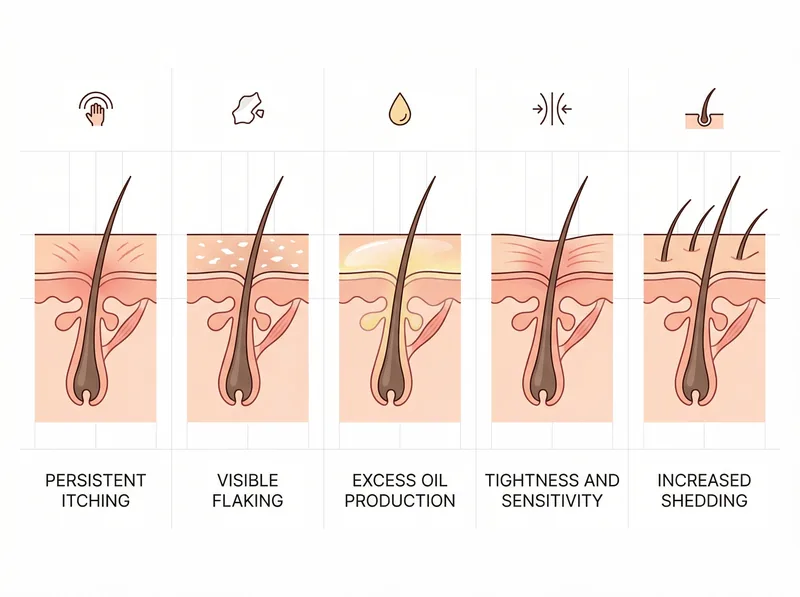 Five key warning signs your scalp is struggling with environmental stress and mineral buildup
Five Warning Signs Your Scalp Is Struggling
Your scalp communicates distress through specific symptoms. These aren’t random annoyances. They’re your body’s way of signaling that something in your environment or routine is changeing normal scalp function.
Persistent itching that returns within hours of washing suggests your scalp is reacting to something. In hard water areas, this is often a response to mineral deposits that create an alkaline environment on your skin. Research published in the International Journal of Trichology found that improved scalp pH changes the skin barrier and triggers inflammatory responses that manifest as itching and sensitivity.
Visible flaking is different from dry skin. Dandruff-like flakes in hard water climates often result from a combination of mineral buildup and yeast overgrowth. The minerals create an environment where Malassezia, a scalp yeast, can proliferate. Your scalp responds by accelerating cell turnover, creating those white flakes.
Excess oil production seems counterintuitive, but it’s actually your scalp trying to compensate. When mineral deposits strip away your scalp’s natural oils during washing, your sebaceous glands go into overdrive. You end up with hair that looks greasy by evening, even though you washed that morning. This cycle of stripping and overproduction creates a constant state of imbalance.
Tightness or sensitivity after washing indicates your scalp barrier is compromised. That tight, almost painful feeling isn’t normal. It suggests the washing process is changeing your scalp’s protective layer, often because hard water minerals are preventing proper rinsing and leaving a residue that continues to interact with your skin.
Increased shedding beyond your normal pattern deserves attention. While losing 50-100 hairs daily is normal, a sudden increase often correlates with scalp inflammation. When follicles are surrounded by mineral buildup and operating in a changeed pH environment, they can’t anchor hair as effectively. The result is increased shedding that people often mistake for hair loss.
Why Hard Water Destroys Scalp Balance
The water you wash with isn’t neutral. In the Gulf region, Southern California, Arizona, and parts of Australia, tap water contains improved levels of calcium, magnesium, and other dissolved minerals. These minerals don’t just rinse away. They bind to your skin and hair, creating a physical layer that accumulates with each wash.
This mineral layer does three things that change scalp health. First, it raises your scalp’s pH from its natural slightly acidic state (around 4.5-5.5) to a more alkaline level. This pH shift weakens your scalp’s protective acid mantle and creates an environment where problem-causing bacteria and yeast can thrive. Second, the deposits physically block follicles and sebaceous glands, preventing normal oil production and distribution. Third, the minerals create a barrier that prevents moisture from penetrating your scalp, leading to dehydration despite the humidity in many of these climates.
A study in the Journal of Cosmetic Dermatology examined the effects of hard water on skin and found that calcium deposits specifically change the skin barrier function and increase transepidermal water loss. Your scalp experiences the same mechanism. The minerals essentially create microscopic cracks in your scalp’s protective barrier, allowing irritants in and moisture out.
But here’s what makes this particularly problematic: most people respond to scalp issues by washing more frequently or using stronger cleansing products. In hard water areas, this makes everything worse. You’re adding more mineral deposits with each wash while simultaneously stripping away more of your scalp’s protective oils. The cycle intensifies until you address the root cause, which is the water itself and the buildup it creates.
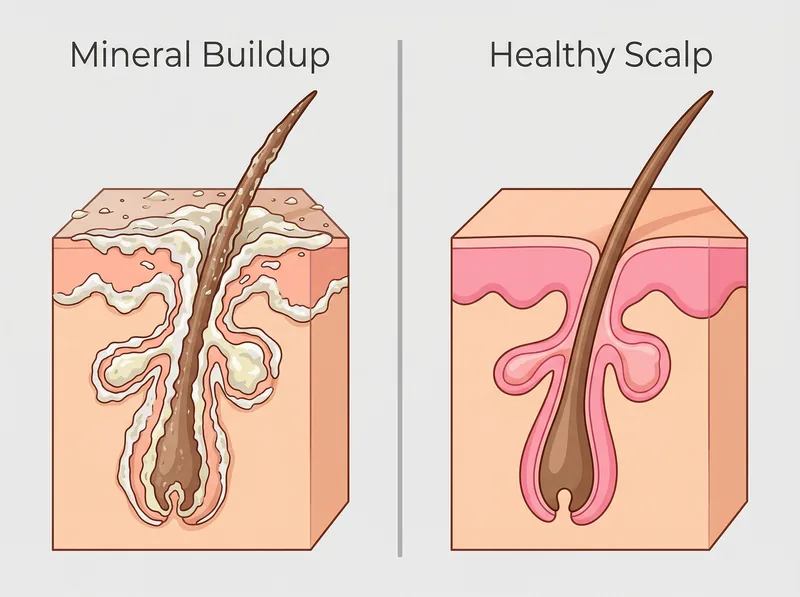 How mineral deposits from hard water create a barrier that suffocates follicles and changes scalp balance
The Three-Step Scalp Reset Protocol
Fixing an unhealthy scalp in hard water climates requires a specific sequence. You can’t just add products and hope for improvement. You need to remove what’s causing the problem, restore normal function, and then protect against future accumulation.
Step one is chelation, which means removing existing mineral deposits from your scalp. This requires a chelating shampoo that contains ingredients specifically designed to bind to and remove mineral buildup. Look for formulations with EDTA, citric acid, or phytic acid. A chelating shampoo like Regrowth+ is formulated specifically for this purpose, combining chelating agents with scalp-soothing ingredients to remove buildup without causing additional irritation. Use it once or twice weekly until symptoms improve, then maintain with weekly chelating treatments.
Step two is rebalancing your scalp’s microbiome and pH. After removing mineral buildup, your scalp needs support to restore its natural protective mechanisms. This means using pH-balanced products (look for formulations around 5.5), incorporating ingredients that support the skin barrier like ceramides and niacinamide, and potentially using a scalp serum with prebiotics to support beneficial bacteria. Research in the Journal of Drugs in Dermatology found that topical niacinamide significantly improved scalp barrier function and reduced inflammation in subjects with scalp sensitivity.
Step three is protection, which means preventing new mineral accumulation while your scalp heals. This might include using a shower filter (though these have limitations in very hard water), doing a final rinse with filtered or distilled water, and maintaining your chelating routine even after symptoms resolve. The goal isn’t perfection. It’s managing the environmental challenge so your scalp can maintain balance despite the water chemistry.
What Actually Works for Specific Scalp Issues
Different scalp symptoms require slightly different approaches, though all start with addressing mineral buildup. Let’s break down what works for each specific issue.
For persistent itching and sensitivity, focus on anti-inflammatory ingredients after chelation. Look for scalp treatments containing tea tree oil, which has antimicrobial properties, or colloidal oatmeal, which soothes irritated skin. A review in the International Journal of Dermatology found that tea tree oil at 5% concentration significantly reduced scalp inflammation and itching in subjects with seborrheic dermatitis. But these treatments only work once you’ve removed the mineral layer that’s causing the underlying irritation.
For visible flaking and dandruff-like symptoms, you need to address both the mineral buildup and the yeast overgrowth it enables. After chelating, use a treatment shampoo containing zinc pyrithione or ketoconazole once or twice weekly. These ingredients specifically target Malassezia yeast. Research suggests that alternating between chelating treatments and antifungal treatments produces better results than using either alone in hard water climates.
For excess oil production and greasiness, resist the urge to wash daily. Instead, focus on thorough chelation to remove the buildup that’s triggering overproduction, then give your scalp time to recalibrate. This typically takes 2-3 weeks. During this period, use a gentle, pH-balanced shampoo on non-chelating days. Your sebaceous glands will gradually adjust their output once they’re no longer compensating for constant stripping.
For tightness and barrier damage, you need to repair while you cleanse. Look for chelating products that include conditioning agents and skin barrier-supporting ingredients. After washing, apply a lightweight scalp serum with hyaluronic acid or glycerin to help restore moisture balance. The goal is to remove minerals without further compromising your already-damaged barrier.
The Timeline for Scalp Recovery
Understanding the recovery timeline helps you stick with the protocol when you’re not seeing immediate results. Scalp healing happens in phases, and each phase takes time.
Week one focuses on removal. You’re chelating existing buildup and might actually notice symptoms worsen slightly as minerals are lifted from your scalp. This is normal. Your scalp is adjusting to the removal of a layer it’s been trying to work around. Itching might increase temporarily as circulation improves to the area.
Weeks two through four are the rebalancing phase. This is when you should start noticing real improvement. Itching typically decreases first, followed by reduced flaking. Oil production takes longer to normalize because your sebaceous glands need time to adjust their output. Most people see significant improvement in symptoms by the end of week three if they’re consistent with the protocol and have successfully removed the mineral barrier.
Weeks four through eight are maintenance and refinement. By this point, your scalp should feel noticeably better. You’re fine-tuning your routine based on how your scalp responds. Some people can reduce chelating frequency to once weekly, while others in very hard water areas need to maintain twice-weekly treatments. The key is finding the minimum effective frequency that keeps your scalp balanced.
If you’re not seeing improvement by week six, something else is going on. This might indicate a dermatological condition that requires professional treatment, like psoriasis or a fungal infection that needs prescription medication. It could also mean the water in your area is so hard that home treatments aren’t sufficient, and you need to consider more aggressive filtration or professional scalp treatments.
When to See a Professional
Most scalp issues in hard water climates respond to the protocol outlined above. But some symptoms require medical evaluation, and it’s important to recognize when DIY approaches aren’t enough.
See a dermatologist or trichologist if you notice sudden hair loss that exceeds normal shedding. While increased shedding from scalp inflammation is common and reversible, sudden patches of hair loss, rapid thinning, or bald spots suggest a medical condition like alopecia areata or a severe fungal infection that needs professional diagnosis and treatment.
Persistent symptoms beyond six weeks of proper treatment also warrant professional evaluation. If you’ve been consistent with chelation, pH-balanced products, and scalp treatments but still have significant itching, flaking, or sensitivity, you might have an underlying condition that’s being aggravated by but not caused by hard water. Conditions like seborrheic dermatitis, psoriasis, or contact dermatitis require specific medical treatments.
Any scalp symptoms accompanied by pain, bleeding, or oozing need immediate medical attention. These suggest infection or severe inflammation that won’t resolve with over-the-counter treatments. Similarly, if you notice changes in scalp texture, like hardening, unusual growths, or significant color changes, get them evaluated promptly.
Don’t hesitate to seek professional help if scalp issues are affecting your quality of life. Constant itching and discomfort aren’t something you should just tolerate. A trichologist can perform a scalp analysis to identify specific issues, while a dermatologist can rule out medical conditions and prescribe stronger treatments if needed. In hard water areas, many dermatologists are familiar with mineral-related scalp issues and can provide targeted guidance for your specific situation.
References
- Scalp pH and Its Role in Hair and Scalp Health - International Journal of Trichology
- Effects of Hard Water on Skin Barrier Function - Journal of Cosmetic Dermatology
- Topical Niacinamide and Barrier Function in Sensitive Skin - Journal of Drugs in Dermatology
- Tea Tree Oil in the Treatment of Seborrheic Dermatitis - International Journal of Dermatology
- Scalp Microbiome and Its Role in Scalp Health - American Academy of Dermatology