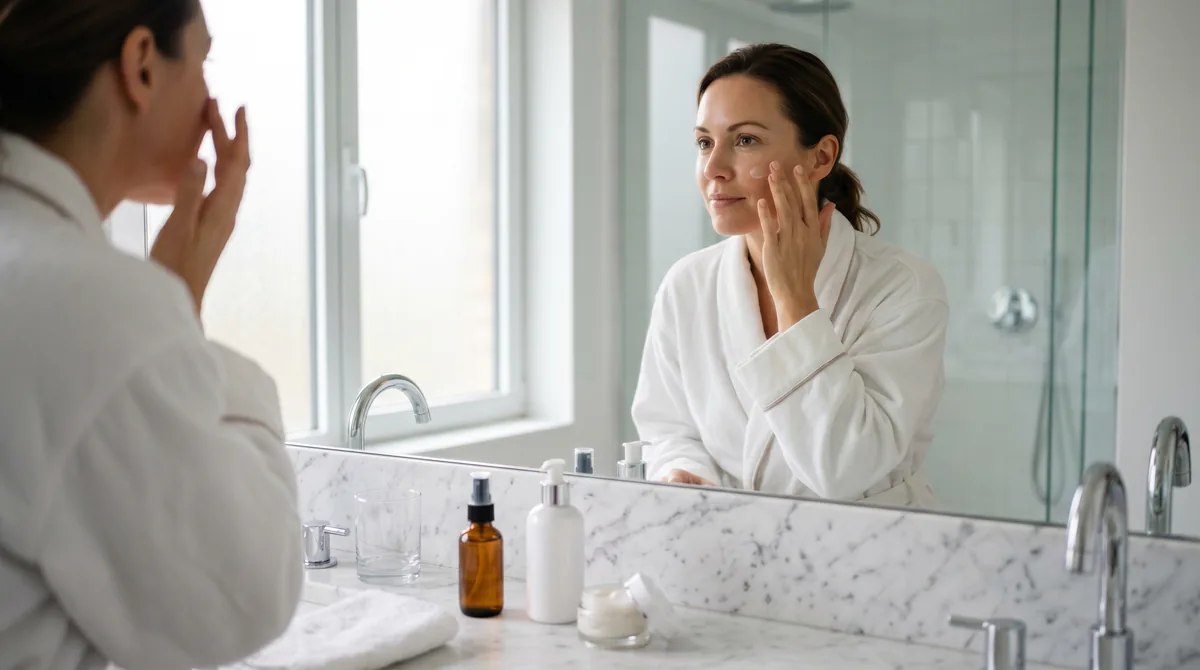
If you’re flying twice a month for work, your skin isn’t recovering between trips. You land, shower in hotel water that’s nothing like home, sleep four hours in recycled air, wake up puffy, and do it again. By Thursday, your face feels tight and your scalp itches. By the weekend, you’re breaking out in places you normally don’t.
This isn’t about forgetting your moisturizer. It’s about compounding environmental stress that your regular routine wasn’t built to handle. This article contains affiliate links. See our affiliate disclosure for details.
Business travel skincare for women isn’t just miniaturizing your bathroom shelf. It’s understanding what airplane cabins, hotel showers, and time zone shifts actually do to your skin barrier and hair, then building a targeted defense system that fits in a quart-sized bag.
What Happens to Your Skin on a Business Trip
Let’s start with the flight. Cabin humidity sits between 10 and 20 percent. That’s lower than the Sahara. Your skin loses moisture faster than you can replace it, your tear film evaporates (hello, dry eyes), and your nasal passages dry out, which is why you’re more likely to get sick after flying.
Then you land and shower. Hotel water varies wildly by location. If you’re based in a soft-water city and you travel to a hard-water region, your skin barrier gets shocked. The mineral content is different, the pH is different, and your products don’t rinse the same way. You might notice your hair feels coated or your cleanser won’t lather.
Add the hotel room itself. Most hotels keep AC cranked to arctic levels, dropping indoor humidity even further. You’re sleeping in air that’s as dry as the plane. Your skin tries to compensate by producing more oil (cue the breakouts) or it just gives up and flakes.
Now layer in jet lag. Your circadian rhythm controls skin cell turnover, collagen production, and barrier repair. When you cross time zones, that rhythm gets changeed. Research shows that circadian misalignment impairs skin barrier function and slows wound healing. Your skin literally can’t repair itself as efficiently when you’re jet-lagged.
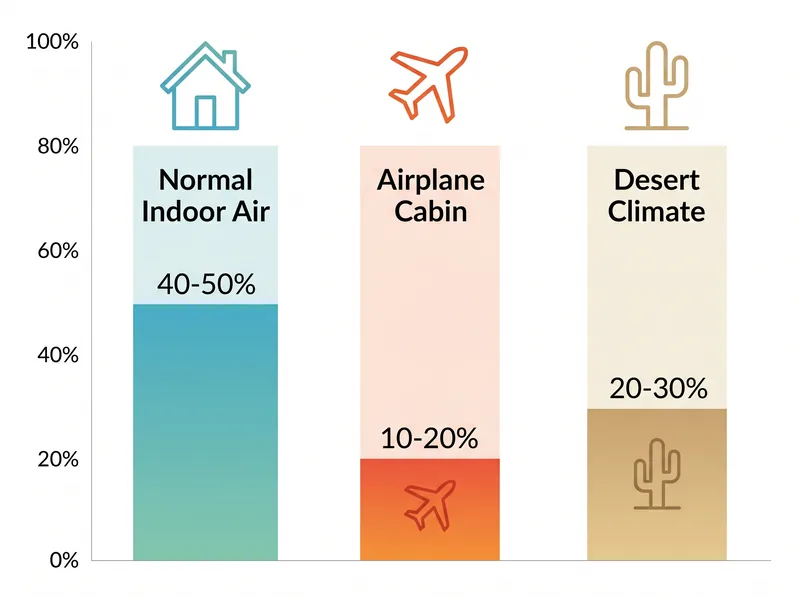 Cabin air humidity drops to 10-20%, lower than most desert climates, causing rapid moisture loss from skin and hair.
The Shower Problem Nobody Talks About
Hotel showers are the biggest skincare saboteur on business trips, and most women don’t realize it until the damage compounds over multiple trips.
Here’s what’s happening. You’re exhausted, you take a long, hot shower to decompress. The water is harder than what you’re used to (or softer, which brings its own issues). The minerals bond to your hair and skin. Your regular shampoo doesn’t clarify properly because it wasn’t formulated for that water chemistry. You step out, towel off with a rough hotel towel, and your barrier is compromised before you even apply a product.
If you’re traveling to the Gulf region or other hard-water areas, this effect is even more pronounced. The calcium and magnesium content can be three to four times higher than what you’re used to. Your hair feels like straw after one wash. Your skin feels tight and filmy. That’s mineral buildup, and your regular products can’t remove it.
The fix isn’t avoiding hotel showers (though shorter, cooler showers help). It’s using a chelating shampoo like Regrowth+ as your reset wash when you travel. Chelating agents bind to the minerals and actually remove them instead of just coating over the buildup. One clarifying wash in hard water can prevent a week of bad hair and scalp irritation.
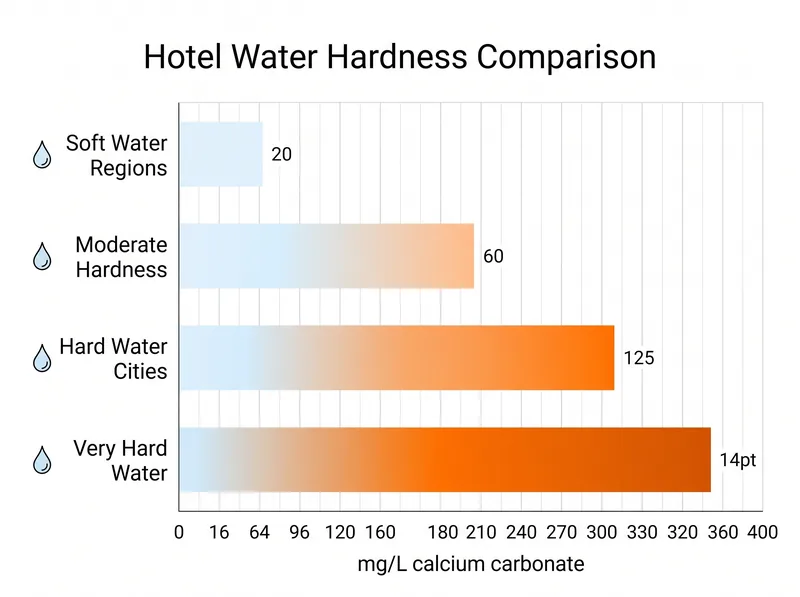 Hotel water hardness varies dramatically by location. Your skin barrier adapts to your home water, then gets shocked by travel.
Building Your Travel Skincare Kit
Your travel kit should do three things: protect your barrier, remove environmental buildup, and maintain hydration. That’s it. You’re not doing a full anti-aging routine in a hotel bathroom at 11 PM.
Start with a gentle, pH-balanced cleanser that works in any water. Cream or oil cleansers are better than foaming ones because they don’t rely on water chemistry to rinse clean. If you’re acne-prone, a micellar water works as a first cleanse before your regular face wash.
Next, a hydrating toner or essence. This isn’t optional. You need to flood your skin with humectants immediately after cleansing because the air is working against you. Look for hyaluronic acid, glycerin, or beta-glucan. Apply it on damp skin, not dry.
For moisturizer, choose something with both humectants and occlusives. You want to pull moisture in and then seal it. Ceramides, squalane, and niacinamide are your friends here. If you’re flying overnight, apply a thicker occlusive layer (like a sleeping mask or facial oil) before you board. Your skin will thank you when you land.
Hair Strategy for Frequent Flyers
Business travel is brutal on hair, especially if you’re already dealing with hard water at home. The compounding mineral exposure from hotel showers in different cities creates a buildup layer that regular shampoo can’t penetrate.
Pack a chelating shampoo and use it as your first wash in any new location. This removes the mineral film so your regular products can actually work. If you’re traveling frequently, consider using it every third wash even at home to prevent buildup from accumulating between trips.
For styling, bring a leave-in conditioner or hair oil that can double as a heat protectant. Hotel hair dryers are notoriously harsh, and you’ll need a barrier between your hair and that 200-degree blast. If you can skip heat styling entirely, do it. Braids, buns, and slicked-back styles are your low-maintenance friends.
If you’re experiencing increased shedding from travel stress, don’t panic. Telogen effluvium from chronic stress and environmental changes is common in frequent travelers. Focus on scalp health, gentle handling, and giving your hair a break from aggressive styling when you’re on the road.
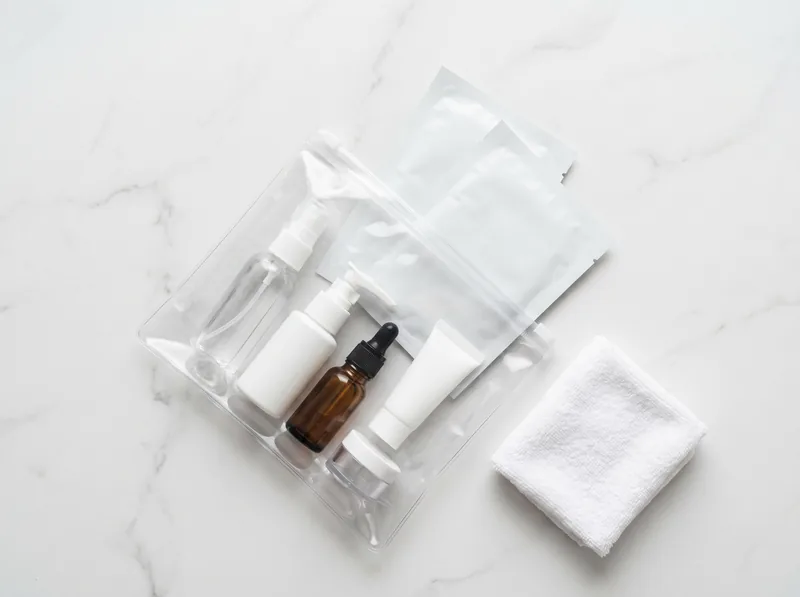 A streamlined travel kit focuses on barrier protection and environmental defense, not a full routine.
In-Flight Skincare Protocol
The plane is where the damage starts, so this is where you intervene. Before boarding, remove your makeup completely. Use a cleansing balm or micellar water, then apply a hydrating serum and a thick moisturizer. Don’t skip this step thinking you’ll do it later. Later, you’ll be asleep or too tired to care.
Once you’re seated, mist your face every hour. Bring a small spray bottle with thermal water or a hydrating mist. This isn’t about looking dewy; it’s about preventing transepidermal water loss. Your skin is losing moisture faster than usual, and you need to replace it continuously.
If it’s a long-haul flight, apply a sheet mask mid-flight. Yes, you’ll look ridiculous. No one cares. The occlusive barrier of the mask prevents evaporation and forces hydration into your skin. Remove it after 15-20 minutes and pat in the remaining serum. Reapply your moisturizer on top.
For your eyes, bring a good eye cream and apply it liberally. The skin around your eyes is thinner and loses moisture faster. If you’re prone to puffiness, a caffeine-based eye gel can help with the fluid retention that happens when you’re sitting for hours.
Post-Flight Recovery Routine
When you land, resist the urge to immediately shower. If you can wait until evening, do. Your skin barrier is already compromised from the flight; adding hotel water on top of that is asking for trouble.
If you must shower, keep it short and lukewarm. Use your chelating shampoo if you’re washing your hair. For your face, cleanse gently and then do a double-hydration step: essence or toner, then a hydrating serum, then moisturizer. You’re trying to repair the barrier damage from the flight before you go to sleep.
Before bed, apply the thickest moisturizer you have or a sleeping mask. Your skin does most of its repair work overnight, and you want to give it every advantage. If you brought a humidifier (some frequent travelers swear by portable USB humidifiers), run it while you sleep.
In the morning, assess the damage. If your skin looks inflamed or reactive, skip actives entirely. Just cleanse, hydrate, and protect with SPF. If you’re breaking out, resist the urge to over-treat. Your skin is stressed; adding a bunch of actives will make it worse. Simple and gentle wins on travel days.
Managing Jet Lag Skin
Jet lag doesn’t just make you tired. It changes your skin’s natural repair cycle. Your body doesn’t know when to ramp up collagen production or when to shed dead cells. The result is dull, sluggish skin that looks older than it should.
The best thing you can do is help your body reset its circadian rhythm as quickly as possible. Get sunlight exposure in the morning at your destination. This signals to your skin (and your brain) that it’s daytime and repair mode should pause. Avoid bright light in the evening, which delays melatonin production and keeps your skin in daytime mode when it should be repairing.
Support your skin’s repair process with the right ingredients. Niacinamide helps with barrier function and is well-tolerated even when your skin is stressed. Peptides support collagen production. Antioxidants (vitamin C, resveratrol, green tea) protect against the oxidative stress of travel. Don’t introduce new actives while traveling, but if these are already in your routine, keep using them.
If you’re traveling east (which is harder on circadian rhythm than traveling west), consider taking melatonin for the first few nights. Better sleep means better skin repair. Sleep research shows that melatonin can help reset your internal clock faster than light exposure alone.
What to Do When You Get Home
Don’t just collapse into your normal routine. Your skin and hair need a reset after travel.
Start with a deep cleanse. Use your chelating shampoo to remove any mineral buildup from hotel water. For your face, do a double cleanse or use a clay mask to draw out any congestion from recycled air and travel stress. This clears the slate so your regular products can penetrate properly.
Then focus on barrier repair. For the next few days, skip actives and just focus on hydration and barrier support. Use products with ceramides, cholesterol, and fatty acids. These are the building blocks your barrier needs to repair itself after environmental stress.
If you’re breaking out post-travel, it’s likely from a combination of stress, dehydration, and barrier changeion. Treat it gently. A BHA toner or salicylic acid spot treatment is fine, but don’t go nuclear with a full acne routine. Your skin needs time to recover, not more stress.
Finally, assess your supplement routine. If you’re traveling frequently, you might need additional support for skin barrier health, stress management, and immune function. Omega-3s, vitamin D, and adaptogens like ashwagandha can help your body cope with the chronic stress of business travel.
References
- Circadian Rhythm and Skin Barrier Function - PubMed
- Aircraft Cabin Air Quality and Health Effects - PubMed Central
- Jet Lag: Causes, Symptoms, and Treatment - Sleep Foundation
- Transepidermal Water Loss and Skin Barrier Function - American Academy of Dermatology